How to prepare for KSeF in Poland as a foreign company
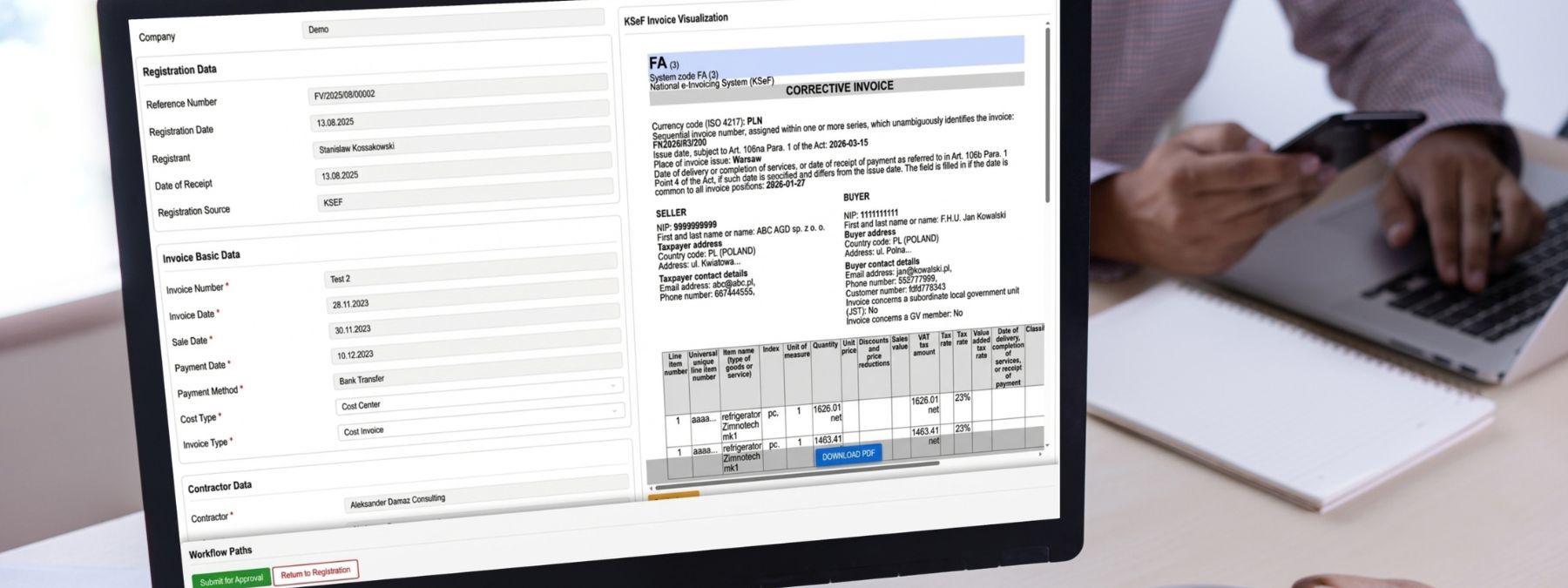
Poland’s National e-Invoicing System, known as KSeF, is becoming a major change for companies that issue, receive, or process invoices on the Polish market. For foreign businesses, the first challenge is understanding whether KSeF applies to your organization at all — and, if it does, how it changes your invoicing, accounts payable, document workflow, and compliance processes.
What is KSeF?
KSeF is Poland’s central government platform for structured e-invoices. Instead of exchanging invoices only as PDFs, paper documents, or email attachments, companies covered by the obligation issue invoices via the government system in a structured XML format. Once accepted, the invoice receives a unique KSeF number and becomes the official invoice document.
For Polish companies, KSeF changes both sides of the invoice process. Sales invoices must be issued through the system, while purchase invoices need to be retrieved from it. For international organizations, the impact depends on whether the company is treated as a Polish taxpayer for a given transaction.
Does KSeF apply to all foreign companies?
The good news is that not every foreign company will need to use KSeF in the same way as a Polish taxpayer. The less convenient news is that the answer depends on your tax status, your Polish presence, and the way your Polish transactions are structured.
If your company does not have a Polish tax presence and does not operate through a Polish entity involved in the transaction, you typically continue to receive invoices outside KSeF — for example by email or in another agreed format. In this scenario, the Polish supplier may still issue the invoice in KSeF on their side, but they must deliver it to you in a way you can access.
If your company has a Polish tax identification number, KSeF applies just as it does for domestic companies. In that case, invoices connected with Polish taxable activity should be handled through KSeF. Other criteria for using KSeF in a company include:
- it has a Polish entity or branch involved in taxable transactions;
- it has a Polish VAT number and issues invoices connected with Polish activity;
- it operates in a multi-company structure where Polish entities share finance, ERP, or workflow systems with foreign entities;
- it wants consistent invoice processing across countries where e-invoicing mandates are already in place or are being introduced.
Key preparation steps for foreign companies
1. Determine your Polish tax status
Start by confirming whether your organization has a Polish tax identification number, a Polish establishment, or another status that makes it subject to Polish invoicing rules. This assessment should be made with tax and legal advisors, especially if your business model involves branches, warehouses, local sales teams, or recurring transactions in Poland.
Do not rely only on a supplier’s assumption. Whether KSeF applies may depend on the exact role of the foreign entity in the transaction.
2. Map invoice flows involving Poland
List the invoice scenarios that involve Polish counterparties. Separate at least the following categories:
- invoices issued by your Polish entity;
- invoices received by your Polish entity;
- invoices from Polish suppliers to a foreign entity;
- invoices from foreign suppliers to a Polish entity;
- transactions involving a foreign company with a Polish VAT number;
- transactions where a Polish fixed establishment may or may not participate.
This map helps identify which invoices should go through KSeF and which should remain outside it.
This is also the type of process mapping where experienced implementation partners can add value. At GoNextStage, KSeF readiness projects usually start with understanding the actual invoice routes, approval paths, ERP dependencies, and exceptions — before any technical integration is designed.
3. Decide how invoices will be delivered and verified
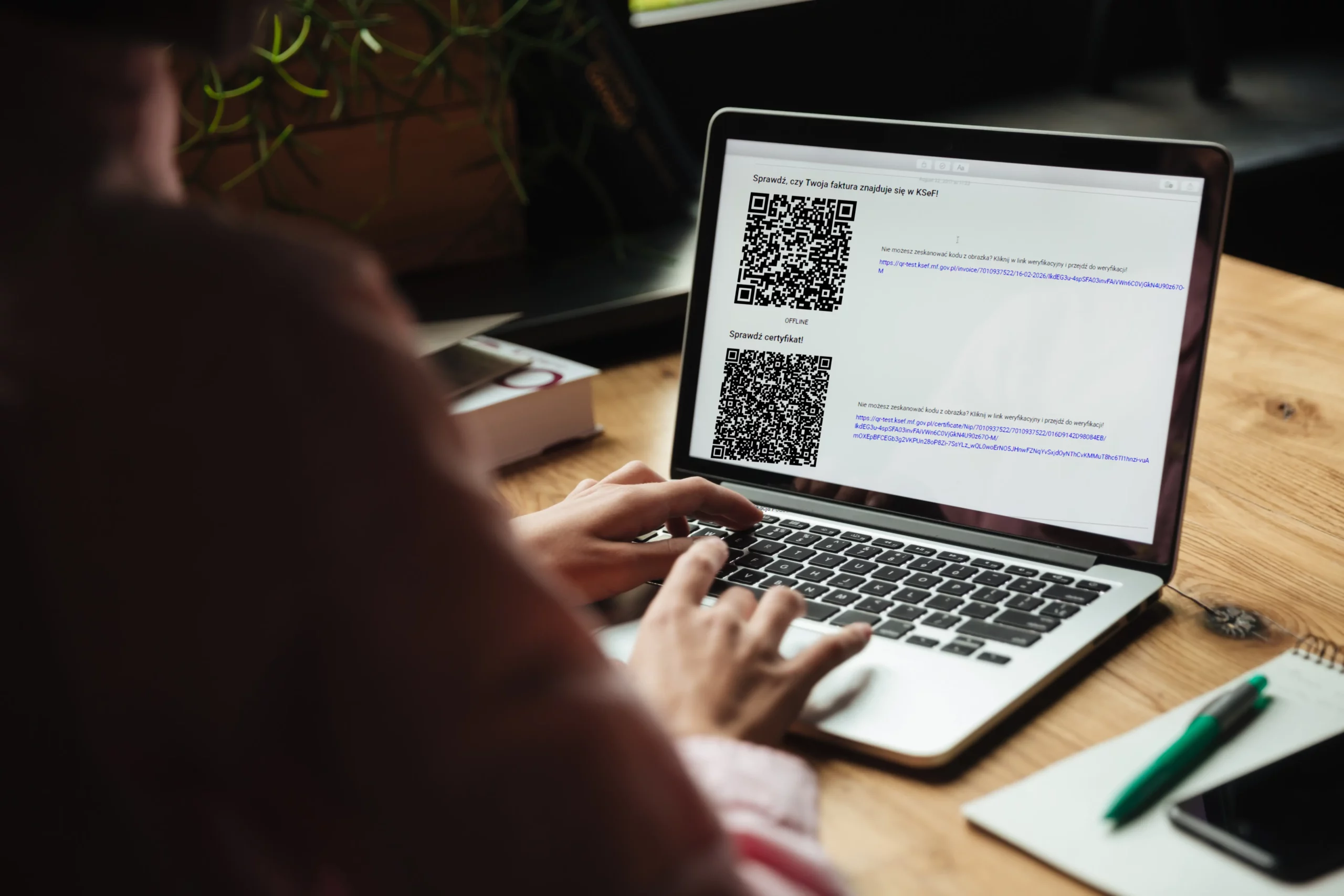
If your company receives invoices from Polish suppliers but does not access KSeF directly, agree how documents will be delivered. PDF by email may still be used, but the document should allow verification through the QR code.
4. Prepare for QR code verification
QR codes are not just a visual detail. They are an important verification mechanism for recipients outside KSeF. Teams should understand when a QR code is expected, what it confirms, and how to handle invoices with two QR codes.
This is particularly relevant for shared service centers that process invoices from multiple countries. Finance teams should define a simple verification rule. For example: when a Polish supplier sends a KSeF invoice outside the platform, the team checks the QR code or uses a feature in GoNextStage KSeF Connector to confirm that the invoice exists in the official system.
5. Review your ERP and workflow systems
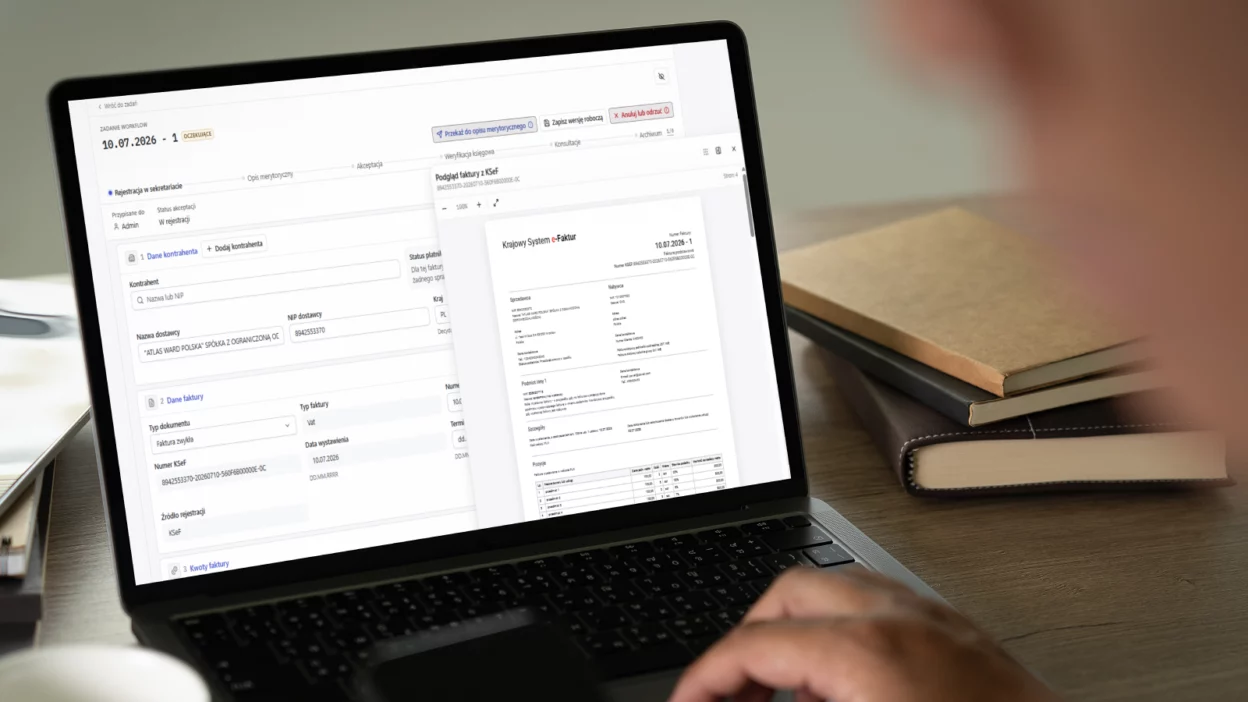
KSeF preparation is much easier if your ERP, document workflow, or accounts payable system can handle structured invoice data and process exceptions. The system should support invoice import, field mapping, status tracking, duplicate detection, approval routing, and integration with ERP posting or payment processes. This is where the GoNextStage KSeF Connector can help companies integrate Polish KSeF requirements with their existing finance, document workflow, AP, and ERP processes — without forcing teams into a separate, disconnected process.
Work with KSeF with no stress left
6. Define business context fields
KSeF standardizes invoice data, but it does not automatically know your internal business context. If you want automation to work, you need rules for connecting invoices with internal objects such as purchase orders, contracts, projects, departments, budgets, or business travel requests.
Optional and descriptive fields in the Polish KSeF schema can become very useful when they contain the right identifiers. A purchase order number, project ID, delegation request number, or contract reference can help a workflow system assign the invoice to the correct process owner automatically.
7. Plan non-standard invoice handling
Foreign companies should prepare for several unusual scenarios:
- a supplier sends a PDF even though the invoice should be available through KSeF;
- the same invoice arrives both through KSeF and by email;
- a document is issued during a local or official KSeF outage;
- the invoice contains no QR code when one is expected;
- the invoice cannot be matched with a purchase order, contract, or business owner;
- a foreign supplier is not covered by KSeF, but the invoice is processed by a Polish entity.
Exception handling should be defined before go-live. Otherwise, teams may improvise under time pressure, increasing the risk of duplicate payments, delayed approvals, or non-compliant processing.
Automate KSeF invoice handling
Manual KSeF handling may be enough for very low invoice volumes, but it becomes difficult to scale. Government tools can support basic access, but they do not replace a company’s internal finance process. They do not show the business context behind an invoice, such as who should approve it or which contract it belongs to. They also do not track whether the same invoice has already been received by email or whether its payment status has changed in the ERP system.
An integrated workflow can retrieve invoices, visualize XML data in a readable format, assign documents to the correct entity, route tasks to responsible users, detect duplicates, support approval paths, and exchange data with ERP systems. This is where KSeF becomes an opportunity to improve accounts payable control, reporting, and process transparency. GoNextStage helps international companies connect Polish KSeF requirements with their processes, so compliance becomes part of the operating model rather than an isolated technical project — an approach already used in projects for organizations such as SELECT Energy, Green Factory, and VINCI.
Summary
Working with multiple e-invoicing systems?
Use a software handling them all. Discover solution managing e.g. Peppol, NAV Online Szamla or Polish KSeF
For foreign companies, KSeF is not always a direct obligation, but it can still change how invoices are issued, received, verified, approved, and archived. The safest approach is to start with mapping invoice flows, defining delivery and verification rules, and then deciding how technology should support the process. GoNextStage helps foreign and international companies connect Polish KSeF requirements with existing finance, AP, ERP, and document workflow processes — turning compliance into a scalable, operationally useful e-invoicing solution.