
Security Audit Service for Your Company
Take your IT security to the next level
How would your organization handle an attempted data theft or fraud? Assess the health of your computer network, servers, backup system, and the software you use.
GoNextStage IT Security Audit Service Evaluates:
Compliance with GDPR, NIS2, SIEM, ISO 27001
Ransomware and APT risk levels
Effectiveness of IAM and access policies
Key Areas Assessed

A clear view of risks and priorities
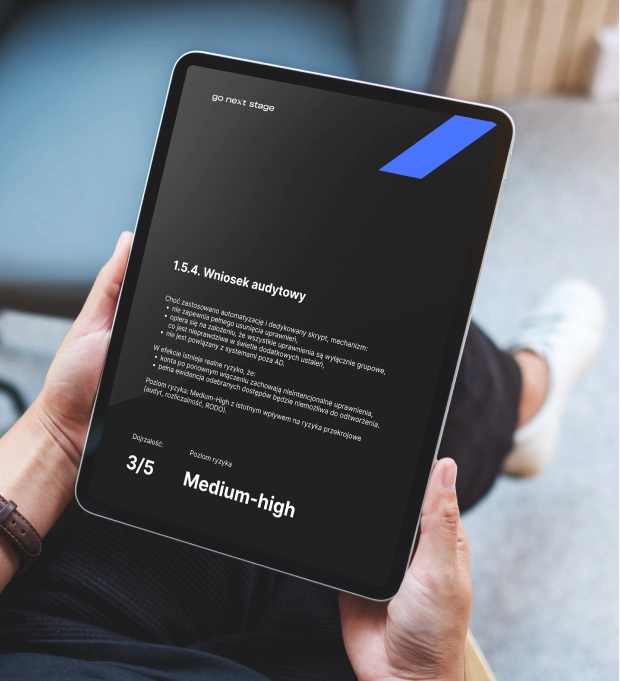
Understand where your security posture is weakest. We provide a clear report of your security gaps, categorized by:
- type of risk
- severity level
- business impact
You can focus on the most urgent issues first and move forward with confidence.
Audit with tools
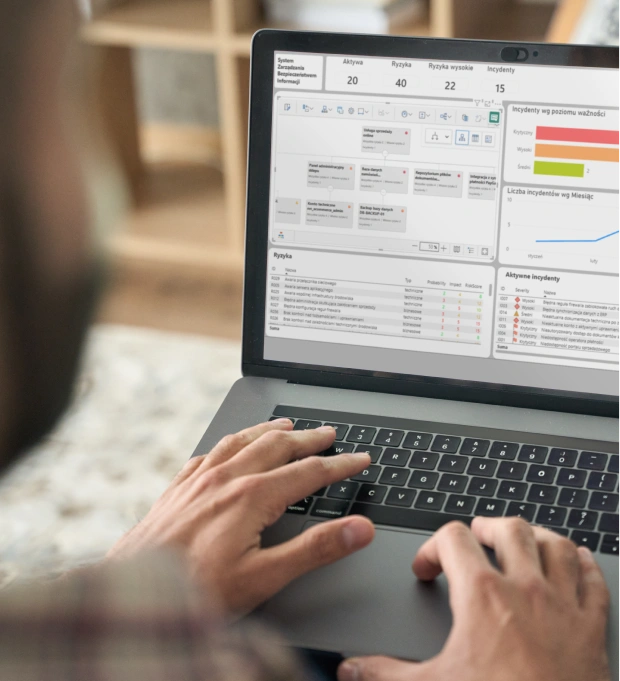
We go beyond audit itself
We also support you after the audit by helping you close the gaps we identify. Our team can implement security and compliance policies, correct misconfigured cloud and server settings, remove unnecessary permissions, and deploy GoSecure — the application for managing your Information Security Management System. This gives you a structured, auditable way, required by NIS2 directive.
Discuss or expand the audit scope
Let’s talk about your priorities, goals and your company’s current situation.
4 steps of an IT security audit
We're top 5
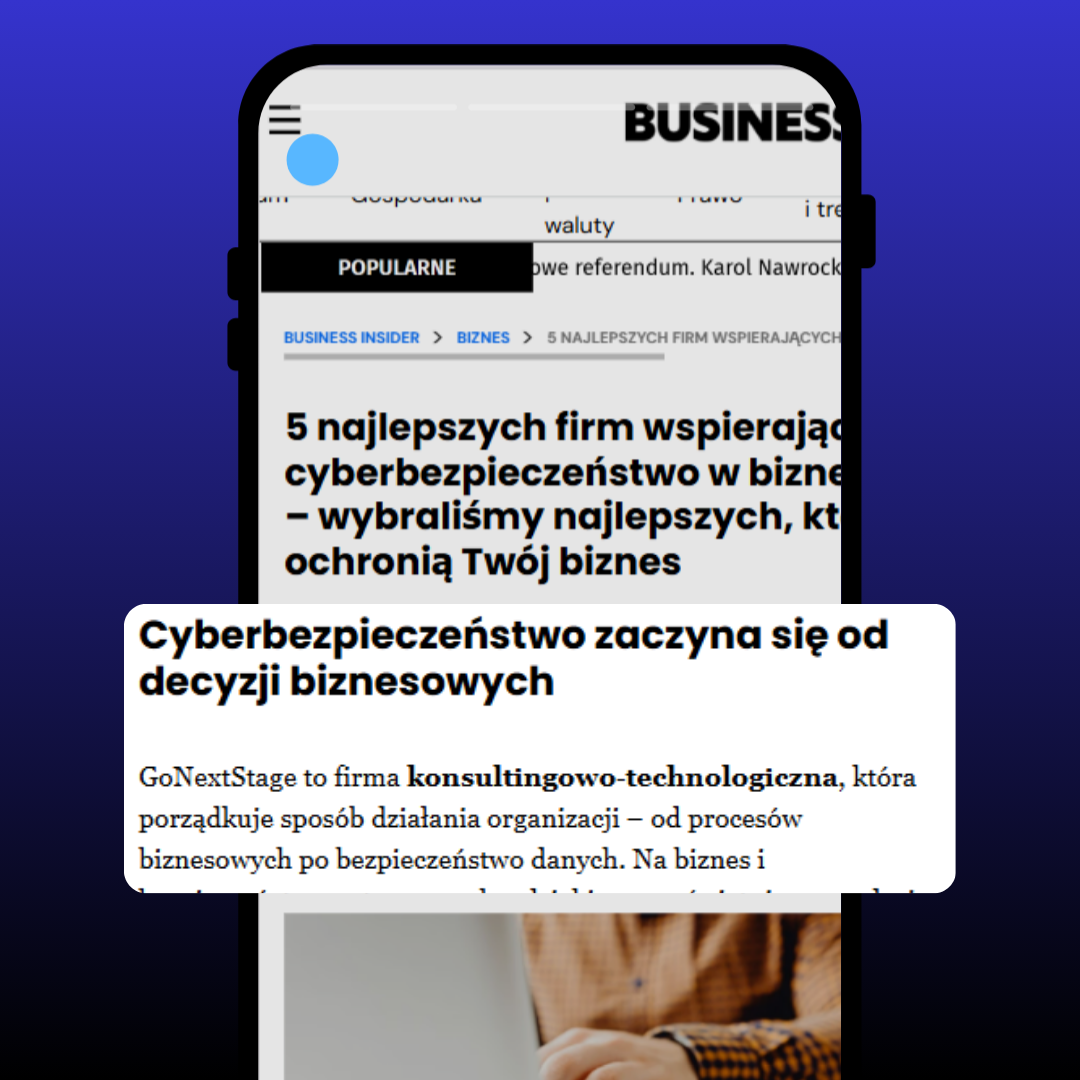
Trusted by
Supplementary services
Remediation and Optimization
- Preparing and implementing an environment hardening plan.
- Automating security configurations (CIS, Microsoft Security Baselines).
- Removing unnecessary permissions and accounts, verifying MFA, improving access policies.
- Implementing security and compliance rules (Conditional Access, Compliance Policies).
Device and Identity Management
- Centralized management of laptops, desktops and mobile devices.
- Standardization of configurations, security policies and updates.
- Automated app deployment and control over access to corporate data.
- Integration of Microsoft Intune with Azure AD, Defender and Conditional Access.
- Data protection through MDM/MAM, disk encryption and copy/print control.
Endpoint Security
- Advanced protection for endpoints: threat detection and automated response.
- Behavior analysis, isolation of compromised devices, automated remediation.
- Real-time monitoring, incident analysis and reporting.
Server Environment Protection
- Threat detection, log and activity analysis.
- Integration with Microsoft Defender for Cloud.
- Automated deployment of patches and security recommendations.
- Support for hybrid environments (Azure, on‑premises).
Azure Management and Optimization
- Design, configuration and maintenance of Azure environments.
- Cost control and cloud resource optimization.
- Implementation of security and compliance rules (Defender for Cloud).
- Network, VPN and identity configuration.
- Backups, Disaster Recovery, monitoring and alerting.
Check your company’s cyber resilience
Before we begin, we’ll send you a short set of questions to help us define the audit scope properly. The sooner you complete it, the faster we can prepare the audit.
Czym jest audyt bezpieczeństwa IT?
Audyt IT to obiektywna weryfikacja firmowego środowiska IT pod kątem bezpieczeństwa i zgodności z prawem. Pod lupę brane są m.in.:
- sposoby zarządzania tożsamościami i uprawnieniami;
- standardy RODO, ISO 27001, SIEM;
- zabezpieczenia sieci i serwerów;
- system kopii zapasowych;
- funkcjonujące mechanizmy wykrywania zagrożeń IT;
- aktualność i legalność oprogramowania.
Efektem audytu jest raport zidentyfikowanych luk bezpieczeństwa wraz z ogólnymi rekomendacjami działań naprawczych.
Na czym polega audyt bezpieczeństwa informacji?
Na weryfikacji systemów IT i infrastruktury technicznej w kontekście zgodności z dobrymi praktykami oraz wymaganiami NIS2, DORA lub ISO 270001. Zespół audytorski weryfikuje odporność organizacji nie tylko “na papierze”, ale także w praktyce: sprawdza zabezpieczenia oraz reakcje i świadomość pracowników w obliczu rzeczywistych prób naruszeń.
Po co audyt firmie?
Poza oczywistą zaletą: wzmocnieniem bezpieczeństwa danych firmowych, organizacja zyskuje także:
- Redukcja ryzyka finansowego, ponieważ identyfikuje słabe punkty zanim dojdzie do incydentu → niższe koszty kar, przestojów i utraty danych
- Ochrona przychodów i ciągłości działania – minimalizuje ryzyko przerw operacyjnych (np. atak ransomware = zatrzymana produkcja / sprzedaż).
- Lepsze decyzje inwestycyjne: pokazuje, gdzie realnie warto inwestować w IT/security (zamiast „na wszelki wypadek”).
- Zgodność bez chaosu: porządkuje wymagania (NIS2, ISO, RODO) i przekłada je na konkretne działania → mniej ryzyka kar.
- Wzrost wiarygodności rynkowej: ułatwia współpracę z dużymi klientami i partnerami (często wymagają spełnienia standardów bezpieczeństwa).
- Przewaga konkurencyjna: firmy z uporządkowanym bezpieczeństwem szybciej wdrażają nowe procesy i rozwiązania cyfrowe.
- Lepsza kontrola nad organizacją: zarząd dostaje jasny obraz ryzyk + plan działania → większa przewidywalność biznesu